

Introduction
Acne scars on the cheeks are common because the cheek area is frequently affected by inflamed acne, deeper breakouts, repeated picking and post-acne skin damage. At Dr Plus Aesthetic Clinic Singapore, patients seeking assessment at a Laser Clinic in Singapore are usually evaluated for scar type, skin texture, active acne, pigmentation and suitability for combination treatment rather than being given a one-size-fits-all acne scar plan.
For many patients searching for acne scars on cheeks Singapore, the concern is not only the scar itself, but how the scars appear under light. Cheek scars can look more obvious in side lighting, photos, mirrors, makeup application and video calls because shallow depressions cast shadows across the midface. Some patients also have post-acne brown marks or redness together with true depressed scars, which makes the cheek area look uneven in both colour and texture.
Acne scars are usually classified by shape and depth. Medical reviews commonly describe atrophic acne scars as ice pick, boxcar and rolling scars, and treatment choice depends on the scar type, severity and skin characteristics. Acne scarring reviews explain that ice pick scars are narrow and deep, boxcar scars are wider with defined edges, and rolling scars create broader wave-like depressions. (PMC)

Image credit: Gustavo Fring on Pexels
Key Takeaways
| Key Point | Summary |
|---|---|
| Why cheeks scar easily | The cheeks commonly develop inflamed acne, deeper lesions and repeated breakouts, which can damage collagen and leave texture changes. |
| Main cheek scar types | Cheek acne scars may include rolling scars, boxcar scars, ice pick scars and mixed scars. |
| Pigmentation is different | Brown or red post-acne marks are colour changes, not true depressed scars. They may need separate pigmentation treatment. |
| One treatment may not be enough | Different scars need different methods such as laser, subcision, microneedling, PRP, filler or pigmentation treatment. |
| Doctor assessment matters | Scar type, skin type, active acne, downtime tolerance and pigmentation risk should be checked before treatment. |
| Realistic result | Improvement is possible for many patients, but complete scar removal is uncommon. |
| Prevention is important | Treating active acne early and avoiding picking can reduce the risk of new cheek scars. |
Why Acne Scars Commonly Appear on Cheeks
The cheeks are one of the most noticeable areas for acne scars because they form a large, curved surface of the face. When this area has dents, pits or uneven texture, light can create shadows that make scars look deeper than they may feel by touch.
Cheeks Often Develop Inflamed Acne
Acne scars are more likely after inflamed acne, especially when inflammation reaches deeper skin layers. Larger papules, pustules, nodules or cystic acne can damage collagen and underlying tissue. When healing is incomplete or uneven, the skin may form atrophic scars.
A review on effective treatments of atrophic acne scars notes that atrophic acne scarring is related to inflammatory mediators and degradation of collagen fibres and subcutaneous fat, which helps explain why deeper acne can leave depressed scars. (PMC)
Cheeks Are Frequently Picked or Squeezed
Many patients squeeze cheek pimples because they are easy to see and reach. Picking can increase inflammation, delay healing and worsen pigmentation or scarring. The more inflammation that occurs during healing, the higher the chance of lasting marks or texture changes.
Cheek Skin Shows Shadows Easily
Even mild depressions can look more visible on the cheeks because of lighting. Rolling scars may appear subtle in soft lighting but more obvious in harsh lighting. This is why cheek acne scars often bother patients even when scars are not very deep.
Mixed Concerns Are Common
Many patients do not have only one issue. A single cheek may show rolling scars, boxcar scars, enlarged pores, post-acne pigmentation and active acne. This is why cheek acne scar treatment Singapore should be based on assessment rather than guessing from online photos.
Types of Cheek Acne Scars
Cheek acne scars are usually atrophic, meaning they are depressed rather than raised. However, some patients may also develop hypertrophic scars or keloids, especially if they are prone to abnormal scarring.
Rolling Scars on Cheeks
Rolling scars are broad depressions with soft edges. They create a wave-like texture across the cheeks and often look worse when light hits from the side. Rolling scars may be caused by fibrous bands pulling the skin downward.
These scars may respond to treatments that release tethering and stimulate collagen, such as subcision, laser, RF microneedling or filler support in selected cases.
Boxcar Scars on Cheeks
Boxcar scars are round or oval depressions with more defined borders. They may look like small craters. Some are shallow, while others are deeper and more sharply edged.
Shallow boxcar scars may improve with resurfacing treatments, while deeper boxcar scars may require more targeted procedures. Treatment depends on depth, border sharpness and skin type.
Ice Pick Scars on Cheeks
Ice pick scars are narrow, deep pits. They are often harder to treat because they extend deeper into the skin. They may not respond well to fillers or surface-only treatments.
Ice pick scars may require targeted techniques such as TCA CROSS, punch procedures or staged resurfacing, depending on suitability.
Post-Acne Marks on Cheeks
Post-acne marks are not the same as scars. Brown marks are often post-inflammatory hyperpigmentation, while red or purple marks may be post-inflammatory erythema. These colour changes may improve over time, but they can last longer without proper sun protection and skincare.
Mayo Clinic’s acne scar treatment guidance separates treatment options such as home skincare, soft tissue fillers, steroid injection and laser resurfacing, reinforcing that different acne scar concerns require different approaches. (Mayo Clinic)
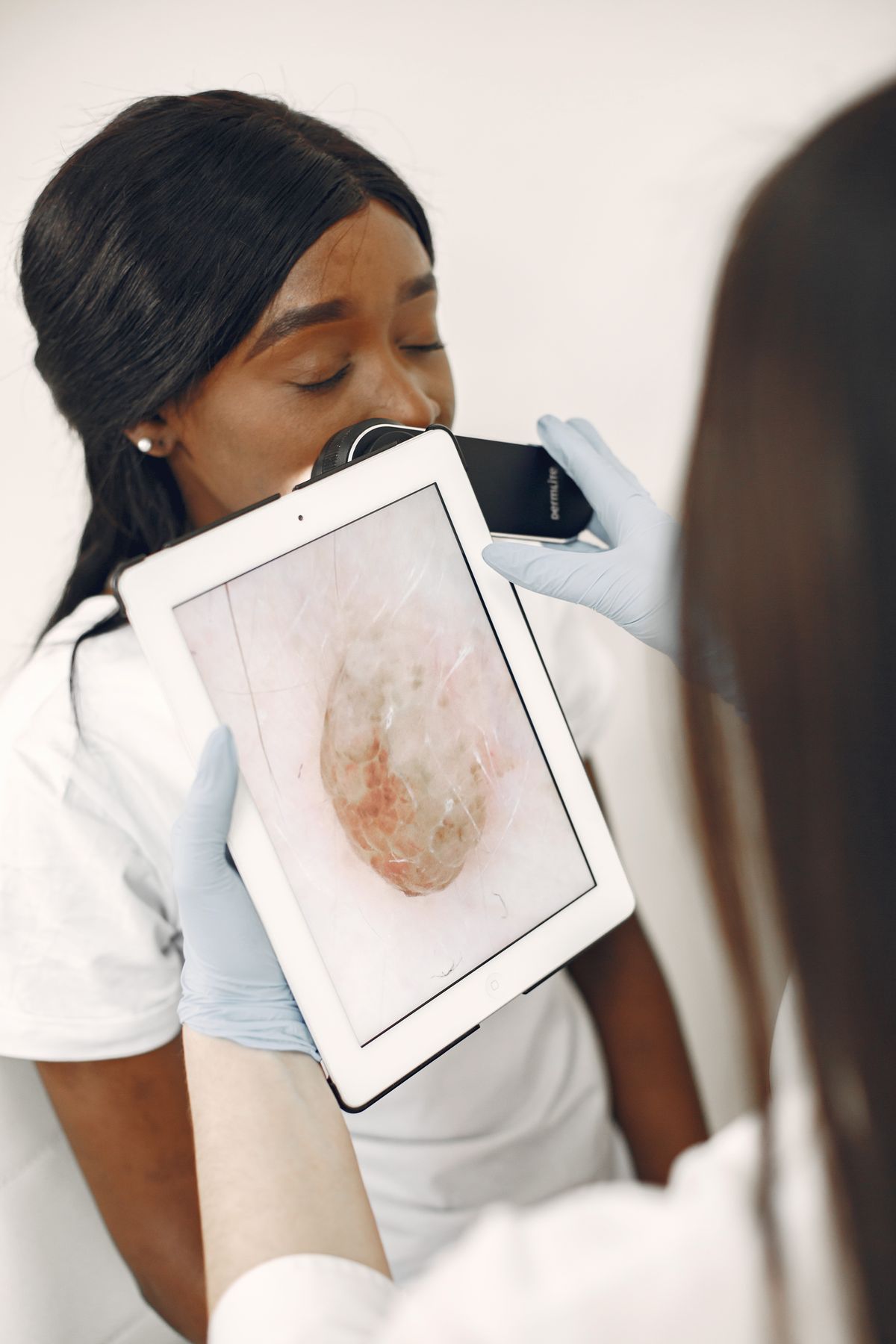
Image credit: Gustavo Fring on Pexels
Causes of Acne Scars on Cheeks
Cheek acne scars usually develop after skin inflammation damages the deeper dermis. Several causes may increase the chance of scarring.
Deep Inflammatory Acne
Cystic or nodular acne is more likely to scar because inflammation occurs deeper in the skin. Even when the pimple resolves, the damaged tissue may heal with collagen loss.
Delayed Acne Treatment
Untreated acne can continue damaging the skin over months or years. Treating acne early may reduce future scarring risk.
Picking and Squeezing
Picking increases trauma, bacteria spread, inflammation and pigment change. It can convert a pimple that may have healed normally into a longer-lasting scar.
Repeated Breakouts in the Same Area
If acne keeps recurring on the cheeks, the skin has less time to recover. Repeated inflammation can worsen collagen loss and create mixed scar patterns.
Genetic and Healing Factors
Some people scar more easily than others. Family history, skin type, inflammation tendency and wound healing response can influence scar formation.
Risk Factors for Cheek Acne Scars
Not every patient with acne develops scars. Risk factors help doctors understand who may need earlier treatment or closer follow-up.
Severe or Cystic Acne
Severe acne is a major risk factor because deeper inflammation causes more tissue damage.
Frequent Picking
Even mild acne can scar if lesions are repeatedly squeezed or scratched.
Darker Skin Types and Pigmentation Risk
Many Singapore patients are prone to post-inflammatory hyperpigmentation. This means acne and acne scar treatments must be planned carefully to reduce the chance of dark marks after inflammation.
Ongoing Active Acne
Treating scars while active acne is uncontrolled may be frustrating because new acne can create new scars. Acne control is often the first step.
Previous Aggressive Treatments
Overly harsh skincare, strong home peels or unsafe at-home devices may worsen inflammation and pigmentation. Medical assessment is safer than experimenting with aggressive products.
Doctor Assessment for Acne Scars on Cheeks
A proper acne scar assessment is more than simply looking at the face from the front. Doctors usually evaluate scars under different lighting and angles because scars can appear different depending on shadows.
Scar Type Assessment
The doctor may classify scars as rolling, boxcar, ice pick, hypertrophic, keloid or mixed scars. This determines whether laser, subcision, filler, TCA CROSS, microneedling or another method may be useful.
Active Acne Check
Active acne should be managed before or alongside scar treatment. New breakouts can create new scars and interfere with healing.
Pigmentation Assessment
Brown or red post-acne marks need different treatment from depressed scars. If pigmentation is the main concern, scar-lifting procedures may not be the right first step.
Skin Type and Sensitivity
The doctor should consider skin tone, sensitivity, keloid tendency, medication use and history of pigmentation before choosing treatment intensity.
Downtime and Lifestyle
Some treatments require redness, peeling, swelling or bruising downtime. The plan should match the patient’s work, school, events and recovery tolerance.
Treatment Options for Acne Scars on Cheeks
Cheek acne scar treatment is often customised because most patients have mixed scars.
Laser Treatment
Laser treatments may improve texture, surface irregularity and collagen remodelling. Fractional lasers create controlled treatment zones in the skin to stimulate repair.
A systematic review on fractional CO2 laser therapy for acne scars reported that most included patients experienced improvement in scar appearance, with transient redness, swelling and post-inflammatory hyperpigmentation among common adverse events. (PMC)
Pico Laser
For patients who have post-acne marks together with texture concerns, Pico Laser in Singapore may be discussed as part of a broader treatment plan. It should not be described as a universal acne scar solution because deep scars, tethered scars and ice pick scars often need other methods.
A study on a picosecond 755 nm alexandrite laser with diffractive lens array noted that this technology had demonstrated clinical efficacy for improving acne scarring and wrinkles, although suitability depends on device type, settings, scar type and professional assessment. (PMC)
Subcision
Subcision may be useful for rolling scars that are tethered under the skin. It releases fibrous bands so the depressed scar can lift. It may be combined with PRP or filler in selected cases.
Microneedling or RF Microneedling
Microneedling creates controlled micro-injuries to encourage collagen remodelling. RF microneedling adds radiofrequency energy. These treatments may help texture and shallow scars, but results vary.
PRP
PRP may be used as a supportive treatment with microneedling, laser or subcision. It is not a standalone scar eraser, but it may support healing and collagen response in selected plans.
Dermal Fillers
Some depressed rolling scars may benefit from filler support. Fillers may lift selected depressions, especially after subcision. However, fillers are not usually suitable for ice pick scars or pigmentation-only marks.
Skin Boosters
Some patients with acne scars also have dryness, dullness or poor skin quality. Skin Booster Singapore may be discussed for hydration and skin quality support, but it should not be confused with a primary acne scar correction procedure. Skin boosters do not release tethered scars or erase deep pits.
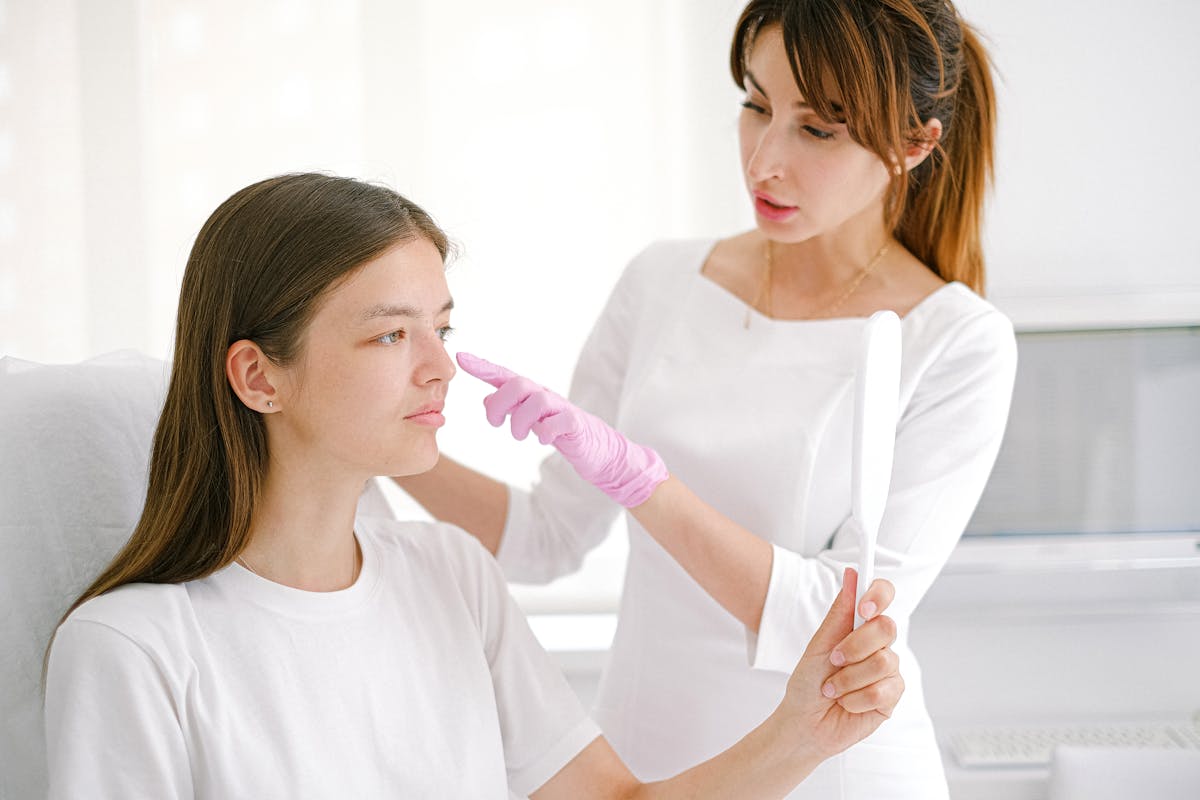
Image credit: Pexels
Benefits of Treating Cheek Acne Scars
Treatment may improve both appearance and confidence when expectations are realistic.
Smoother Skin Texture
Laser, microneedling, RF microneedling and collagen-stimulating approaches may help improve surface texture gradually.
Reduced Shadowing
Subcision or filler may reduce the depth of selected rolling scars, making cheek shadows less obvious.
Better Makeup Application
Patients often notice that makeup sits more evenly after texture improves, although scars may not disappear completely.
Improved Post-Acne Marks
Pigmentation-focused treatments and sunscreen may help reduce brown marks, making the cheeks appear more even in tone.
Personalised Treatment
A doctor-led plan can target the dominant scar type instead of treating all scars the same way.
Limitations of Cheek Acne Scar Treatment
Acne scar treatment can help, but there are limits.
Complete Removal Is Uncommon
Scars are structural changes in the skin. Treatments may improve them, but perfect skin is not a realistic guarantee.
Multiple Sessions May Be Needed
Collagen remodelling takes time. Several sessions may be needed depending on scar severity and treatment type.
Not Every Treatment Suits Every Skin Type
Some treatments may increase pigmentation risk if performed aggressively. Singapore patients with pigmentation-prone skin need careful settings and aftercare.
Active Acne Can Create New Scars
If acne is still active, new scars may form while old scars are being treated. Acne control should be part of the plan.
Downtime Varies
Some treatments involve redness, swelling, bruising, peeling or scabbing. Patients should plan around work or events.
Realistic Expectations
The realistic goal of cheek acne scar treatment is improvement, not perfection.
What May Improve
Treatment may reduce scar depth, soften edges, improve texture, fade post-acne marks, improve skin smoothness and reduce visible shadows.
What May Remain
Some deep pits, old scars, enlarged pores, severe texture irregularity or pigmentation tendency may remain even after treatment.
Progress Is Gradual
Laser and microneedling results depend on collagen remodelling, which can take weeks to months. Subcision and fillers may show earlier changes, but swelling and healing affect the final result.
Photos Can Be Misleading
Acne scars look very different under different lighting. Before-and-after photos should be interpreted carefully because angles, lighting and camera quality can change scar visibility.
Safety Considerations
Safety is a key part of acne scar treatment, especially when combining procedures.
Choose Qualified Providers
Laser, injectables and subcision should be performed with appropriate training, hygiene and safety protocols. Incorrect technique may worsen scars, pigmentation or infection risk.
Understand Pigmentation Risk
Any treatment that creates heat or inflammation may trigger post-inflammatory hyperpigmentation. Sunscreen and proper aftercare are important.
Avoid DIY Procedures
At-home microneedling, harsh peels or unregulated devices may increase the risk of irritation, infection or scarring.
Disclose Medical History
Patients should tell the doctor about pregnancy, breastfeeding, isotretinoin use, keloid tendency, blood thinners, autoimmune conditions, previous lasers and skin infections.
Know Urgent Warning Signs
After procedures, seek review for severe pain, spreading redness, pus, fever, worsening swelling, skin colour changes or visual symptoms after injectables.
Recovery After Cheek Acne Scar Treatment
Recovery depends on the procedure.
After Laser
Laser may cause redness, swelling, dryness, peeling or temporary darkening. Stronger resurfacing may require more downtime.
After Subcision
Subcision can cause bruising, swelling and tenderness. Bruising on the cheeks may last several days.
After Microneedling or RF Microneedling
Temporary redness, sensitivity and mild swelling may occur. Skin should be protected from sun and harsh products.
After Fillers
Filler treatment may cause swelling, bruising, tenderness or small bumps. Patients should avoid pressing the area unless instructed.
General Recovery Tips
Use gentle cleanser, moisturise as advised, apply sunscreen daily, avoid picking scabs, avoid harsh actives until cleared, avoid unnecessary sun exposure and attend follow-up reviews.

Image credit: Pexels
Prevention of Cheek Acne Scars
Preventing new scars is as important as treating existing ones.
Treat Acne Early
Early acne treatment reduces the chance of deep inflammation and scarring.
Do Not Pick Pimples
Picking increases trauma and inflammation. It may worsen both scars and pigmentation.
Use Sunscreen Daily
Sun exposure can make post-acne marks darker and prolong recovery after procedures.
Avoid Harsh Skincare
Over-exfoliating or using strong acids incorrectly may damage the skin barrier and worsen irritation.
Review Persistent Acne
If acne keeps returning on the cheeks, seek medical advice. Ongoing acne should be controlled before aggressive scar procedures.
FAQs About Acne Scars on Cheeks Singapore
Why do acne scars often appear on cheeks?
Cheeks commonly develop inflamed acne and are easy to pick or squeeze. The cheek surface also shows shadows clearly, making scars more visible.
Are cheek acne scars permanent?
True depressed scars may not disappear on their own. They may improve with treatment, but complete removal is uncommon.
What is the best treatment for acne scars on cheeks?
There is no single best treatment for everyone. Rolling scars may need subcision, boxcar scars may need resurfacing or targeted revision, and pigmentation needs separate care.
Can laser remove cheek acne scars?
Laser may improve texture and collagen remodelling, but it may not fully remove deep or tethered scars. Combination treatment may be needed.
Can pico laser treat acne scars on cheeks?
Pico laser may help certain texture and post-acne mark concerns, but deep scars often require other treatments. Suitability depends on assessment.
Can skin boosters treat acne scars?
Skin boosters may support hydration and skin quality but are not primary treatments for deep acne scars.
How many sessions are needed?
The number of sessions depends on scar type, severity, skin type, treatment method and healing response. Multiple sessions are common.
Should acne be controlled before scar treatment?
Yes. Active acne should usually be treated first or alongside scar care to prevent new scars.
Can cheek acne scars worsen after treatment?
If treatment is too aggressive, aftercare is poor, or active acne continues, pigmentation, irritation or new scars may occur. Proper assessment reduces risk.
Is acne scar treatment safe for Singapore skin types?
It can be safe when planned carefully. Treatment settings, pigmentation risk and aftercare should be tailored to the patient’s skin type.
Conclusion
Acne scars on cheeks can happen after deeper inflammation, repeated breakouts, picking and uneven collagen healing. Because the cheeks show shadows easily, even moderate rolling, boxcar or ice pick scars can affect skin texture and confidence.
For patients searching for acne scars on cheeks Singapore, cheek acne scar treatment Singapore, acne scar treatment Singapore or facial acne scars Singapore, the most important first step is proper assessment. The doctor should identify scar type, check active acne, separate pigmentation from true scarring and choose treatments based on safety, downtime and realistic expectations.
Dr Plus Aesthetic Clinic Singapore offers doctor-led consultation and personalised cheek acne scar treatment planning. Depending on suitability, treatment may involve laser, pico laser, subcision, microneedling, PRP, fillers, pigmentation care or supportive skin quality treatments as part of a staged plan.
References
- Acne Scarring — Pathogenesis, Evaluation, and Treatment Options
- Effective Treatments of Atrophic Acne Scars
- Acne Scars: What’s the Best Treatment? — Mayo Clinic
- The Use of a Fractional Laser in Acne Scar Treatment
- Using Normal and High Pulse Coverage with Picosecond Laser Treatment
About Author