

Introduction
Acne scars with pigmentation can be confusing because the skin may look uneven in two different ways: the surface may have dents, pits or rough texture, while the colour may show brown, red or purple post-acne marks. At Dr Plus Aesthetic Clinic Singapore, patients considering Pico Laser in Singapore for post-acne pigmentation are assessed carefully because pigmentation treatment and acne scar treatment are not always the same.
For patients searching for acne scars with pigmentation Singapore, the first step is understanding the difference between a true acne scar and a post-acne mark. A depressed acne scar is a structural change in the skin. It may appear as a dent, pit, crater or uneven texture. Pigmentation, on the other hand, is mainly a colour change caused by inflammation, melanin activity or blood vessel-related redness after acne heals.
This distinction matters because a brightening cream may help dark marks but will not lift a depressed scar. Similarly, a resurfacing or scar-lifting procedure may improve texture but may not fully fade brown pigmentation unless pigment control is included. Medical reviews describe atrophic acne scars as commonly divided into ice pick, rolling and boxcar scars, and treatment choice depends on scar morphology and depth, as explained in this systematic review of acne scarring treatments. (PMC) Post-inflammatory hyperpigmentation is also a common result of inflammation or injury and can be more frequent and persistent in darker skin types, according to this post-inflammatory hyperpigmentation review. (PMC)

Image credit: Gustavo Fring on Pexels
Key Takeaways
| Key Point | Summary |
|---|---|
| Acne scars and pigmentation are different | Acne scars involve texture change, while pigmentation involves colour change. |
| They can appear together | One inflamed acne breakout can leave both a depressed scar and a dark mark. |
| Treatment must be separated | Texture treatments target scars; pigmentation treatments target brown, red or purple post-acne marks. |
| Combination treatment is common | Patients may need laser, subcision, microneedling, PRP, fillers, topical care, chemical peels or pigment-focused lasers. |
| Pico laser role | Pico laser may help selected pigmentation or textural concerns, but it is not a universal solution for all acne scars. |
| Filler role | Dermal filler may help selected depressed rolling scars, not pigmentation-only marks. |
| Realistic goal | The aim is improvement in texture and tone, not guaranteed perfect skin. |
Difference Between Acne Scars and Pigmentation
Many patients use the word “scar” for any mark left after acne. In medical and aesthetic treatment planning, it is more accurate to separate acne scars from post-acne pigmentation.
What Are Acne Scars?
Acne scars are changes in skin structure after inflammation damages the deeper layers of the skin. They may appear as:
- Ice pick scars
- Boxcar scars
- Rolling scars
- Depressed atrophic scars
- Raised hypertrophic scars
- Keloid scars in scar-prone patients
Atrophic acne scars are depressed scars caused by loss of collagen or tissue support. A review on acne scar classification and treatment describes common atrophic scar types as ice pick, rolling and boxcar scars, each with different treatment considerations.
What Is Post-Acne Pigmentation?
Post-acne pigmentation is a colour change after acne inflammation. It may appear as:
- Brown marks
- Grey-brown marks
- Red marks
- Purple marks
- Uneven skin tone
- Dark spots after pimples
Brown marks are often called post-inflammatory hyperpigmentation, or PIH. Red or pink marks may be called post-inflammatory erythema, or PIE. PIH is more related to melanin, while PIE is more related to redness and blood vessel changes after inflammation.
The American Academy of Dermatology notes in its dark spot guidance for darker skin tones that treatment of dark spots begins with sunscreen and that dermatologists may recommend ingredients or procedures depending on the cause. (American Academy of Dermatology)
Why the Difference Matters
If the concern is mainly pigmentation, the skin may feel smooth but look dark. If the concern is mainly scarring, the skin may look uneven because of shadows, even if the colour is normal. When both occur together, the face may look uneven in texture and tone at the same time.
This is why acne scar and pigmentation treatment Singapore should begin with diagnosis. Treating the wrong problem can lead to disappointing results.
Why Acne Scars and Pigmentation Can Appear Together
Acne inflammation can damage the skin in more than one way. One pimple can leave a dark mark, a dent or both.
Inflammation Triggers Pigment
When acne becomes inflamed, the skin may produce more melanin during healing. This can leave brown marks after the pimple settles. The more intense or prolonged the inflammation, the greater the risk of post-acne pigmentation.
Inflammation Damages Collagen
The same inflamed acne lesion may also damage collagen in the deeper dermis. If the skin heals with collagen loss, a depressed scar may form. This is common after cystic acne, nodular acne or repeatedly inflamed pimples.
Picking Makes Both Worse
Picking or squeezing acne increases trauma. This may worsen inflammation, prolong healing, increase pigmentation and raise the risk of scarring. Even a small pimple may leave a darker mark if it is repeatedly squeezed.
Singapore Skin Types May Be Pigmentation-Prone
Many Singaporean patients have Asian skin types that may be more prone to post-inflammatory hyperpigmentation. This does not mean treatment cannot be done, but it means procedures should be selected carefully and aftercare should be strict.
How Doctors Assess Skin Texture and Dark Marks
A proper consultation separates texture problems from colour problems. This helps the doctor decide whether the patient needs scar treatment, pigmentation treatment or both.
Step 1: Identify Scar Type
The doctor examines whether the scars are rolling, boxcar, ice pick, raised or mixed. Scar type affects treatment choice.
Rolling scars may need subcision, filler support or collagen stimulation. Boxcar scars may need resurfacing or targeted revision. Ice pick scars may need TCA CROSS or punch techniques. Raised scars may require a completely different approach.
Step 2: Identify Pigmentation Type
The doctor checks whether the colour change is brown, red, purple or mixed. Brown post-acne marks are commonly PIH. Red marks may involve post-inflammatory erythema. Some patients also have melasma, freckles or sunspots mixed with post-acne marks.
Step 3: Check Active Acne
Active acne should be controlled before or during treatment. If new acne keeps forming, new scars and pigmentation may continue to appear.
Step 4: Assess Skin Sensitivity and Barrier Health
If the skin is dry, red, peeling or irritated, procedures may need to be delayed. Treating inflamed skin aggressively can worsen pigmentation.
Step 5: Review Treatment History
The doctor may ask about previous lasers, peels, acne medication, retinoids, isotretinoin use, skincare products, sunscreen habits and any history of pigmentation worsening after procedures.
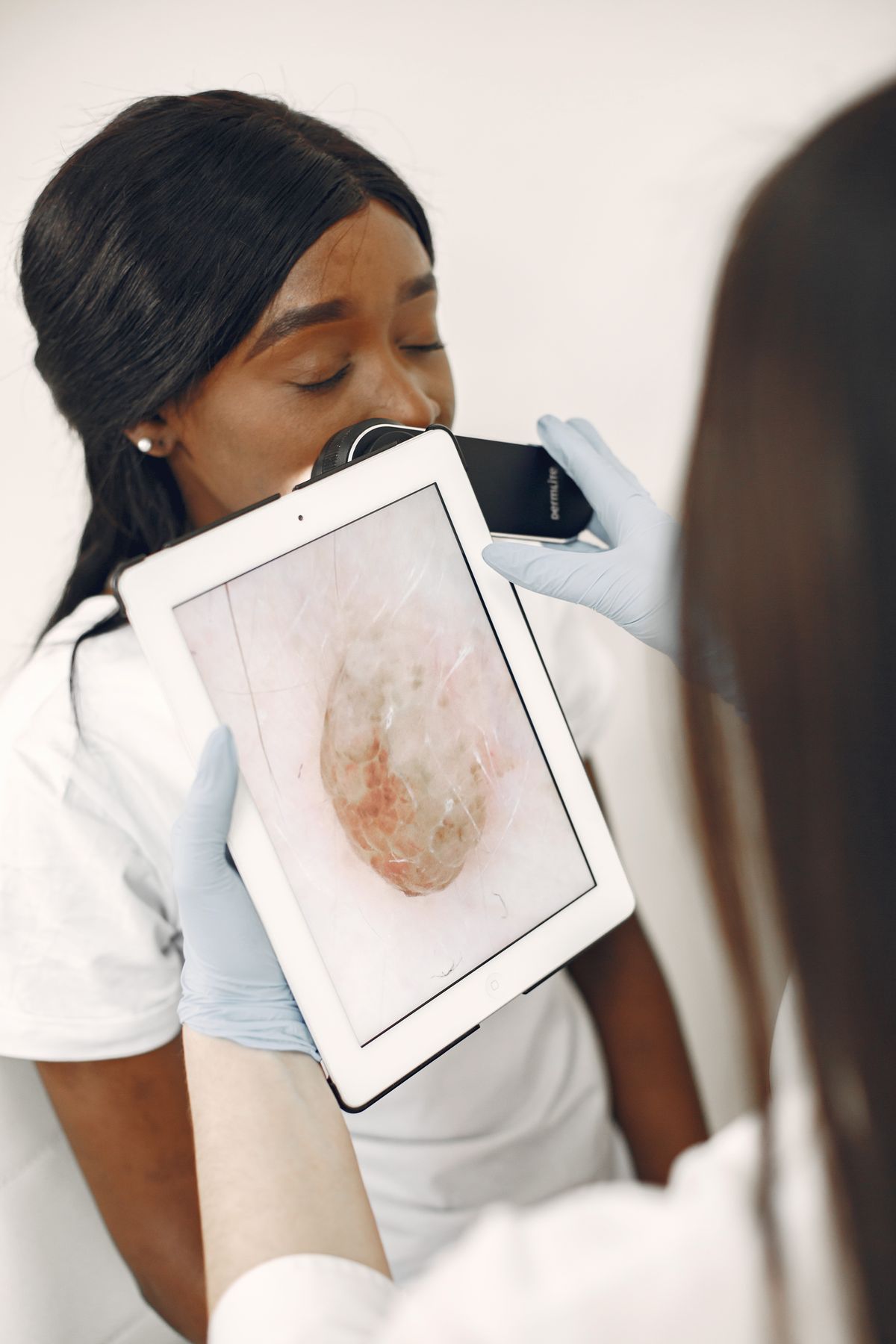
Image credit: Gustavo Fring on Pexels
Acne Scar Treatment Options
Acne scar treatment targets texture. The right option depends on the scar type and severity.
Laser Resurfacing
Laser resurfacing may help improve uneven texture and stimulate collagen remodelling. Fractional lasers create controlled treatment zones in the skin, allowing surrounding untreated skin to support healing.
Patients who have mixed texture and pigmentation may visit a Laser Clinic in Singapore for assessment. However, laser settings must be chosen carefully, especially for pigmentation-prone skin. Aggressive treatment can sometimes worsen post-inflammatory hyperpigmentation.
A review on fractional laser resurfacing for acne scars explains that fractional ablative lasers are used in atrophic acne scar management and work by stimulating remodelling in treated skin zones.
Subcision
Subcision is commonly used for tethered rolling scars. These scars are pulled downward by fibrous bands beneath the skin. Subcision releases the tethering so the depressed area can lift.
Subcision is not usually the main treatment for pigmentation because it targets the scar structure, not skin colour. It may be combined with PRP, filler or laser in selected patients.
Microneedling and RF Microneedling
Microneedling creates controlled micro-injury to stimulate collagen remodelling. RF microneedling adds radiofrequency energy. These treatments may help texture and shallow scars, but results vary.
TCA CROSS
TCA CROSS is often discussed for ice pick scars. It involves careful application of high-strength trichloroacetic acid into narrow scars to stimulate remodelling. It is different from a full-face chemical peel and should be performed only when suitable.
Dermal Fillers for Depressed Scars
Some depressed rolling scars may benefit from filler support. Dermal Filler in Singapore may be discussed when the scar is soft, distensible and related to local volume loss. Fillers do not treat pigmentation; they work by supporting selected depressions.
A systematic review on injectable fillers for atrophic acne scars found that fillers can improve atrophic acne scars, with rolling scars showing stronger response in some studies compared with ice pick and boxcar scars. (PMC) Another systematic review reported that dermal fillers showed favourable outcomes in acne scar treatment, but scar type and technique remain important. (PubMed)
Pigmentation Treatment Options
Pigmentation treatment targets colour. The goal is to reduce brown, red or purple post-acne marks while preventing recurrence.
Sunscreen and Photoprotection
Sunscreen is one of the most important parts of pigmentation care. Without sun protection, post-acne marks can darken and treatment results may be less stable.
Daily broad-spectrum sunscreen is especially important in Singapore because UV exposure is strong year-round. Patients with pigmentation-prone skin may also benefit from hats, shade and avoiding prolonged heat exposure.
Topical Brightening Ingredients
Topical treatments may include ingredients such as azelaic acid, retinoids, vitamin C, niacinamide, kojic acid, cysteamine, hydroquinone or tranexamic-acid-related products, depending on suitability. Prescription ingredients should be used with medical guidance because irritation can worsen pigmentation.
Pico Laser for Post-Acne Marks
Pico laser may be considered for selected pigmentation concerns and some textural concerns, depending on the device, settings and diagnosis. It should not be described as a guaranteed scar remover because depressed scars and pigmentation are different problems.
Chemical Peels
Chemical peels may help selected superficial post-acne pigmentation by encouraging controlled exfoliation. However, the peel type, strength and interval must be suitable for the patient’s skin. Overly aggressive peels may irritate the skin and worsen PIH.
Vascular Laser for Red Marks
If the mark is red or pink rather than brown, pigment-focused treatment alone may not be enough. Red post-acne marks may require different approaches, depending on assessment.
Acne Control
Pigmentation treatment will be incomplete if active acne continues. Every new inflamed pimple can leave a new dark mark. Acne control is often the first step before focusing on post-acne pigmentation.
Image credit: Pexels
Combination Treatment Planning
When acne scars and pigmentation appear together, doctors usually plan treatment in stages.
Why Combination Planning Is Needed
Texture and colour are different problems. A patient may need one treatment to improve scar depth and another to fade pigmentation. Using only one method may improve one concern while leaving the other unchanged.
For example, laser resurfacing may improve texture, but post-acne brown marks may still need sunscreen and pigment control. A filler may lift a rolling scar, but the brown colour over the scar may remain. A brightening cream may fade the mark, but the pit may still cast a shadow.
Step 1: Control Active Acne
Active acne should be treated first or alongside scar care. This may involve topical medication, oral medication or other acne-specific treatment depending on severity.
Step 2: Stabilise Pigmentation
If the skin is very inflamed or pigmentation-prone, doctors may begin with sunscreen, barrier repair and topical treatment before procedures.
Step 3: Treat Dominant Texture Problems
If rolling scars are the main issue, subcision or filler may be considered. If shallow texture is the main issue, laser or microneedling may be considered. If ice pick scars dominate, TCA CROSS or punch techniques may be discussed.
Step 4: Treat Pigmentation Separately
Post-acne pigmentation may be treated with topical care, sunscreen, chemical peels or selected lasers. Red marks may need different management from brown marks.
Step 5: Review and Adjust
Acne scar and pigmentation treatment is usually a journey. The doctor should review progress under consistent lighting and adjust the plan based on healing response.
Benefits of Treating Texture and Dark Marks Differently
Separating acne scar treatment from pigmentation treatment can improve planning and reduce frustration.
More Accurate Treatment
When the doctor identifies what is scar and what is pigmentation, the treatment can be matched more precisely.
Better Expectations
Patients understand why dark marks may fade before dents improve, or why texture may improve while colour still needs time.
Lower Risk of Over-Treatment
If pigmentation is mistaken for scarring, the patient may undergo unnecessary aggressive procedures. If scarring is mistaken for pigmentation, the patient may waste time on brightening creams that cannot lift dents.
More Natural Improvement
A balanced plan can improve both skin tone and texture gradually, helping the skin look smoother and more even under normal lighting.
Limitations of Treatment
Patients should understand the limits before starting.
Complete Scar Removal Is Uncommon
Acne scars are structural. Treatment can improve them, but complete removal is not realistic for many patients.
Pigmentation Can Recur
Post-acne pigmentation can return if acne continues, sunscreen is inconsistent or the skin becomes irritated again.
Multiple Sessions May Be Needed
Texture treatments usually need time for collagen remodelling. Pigmentation treatments may also take weeks or months.
Skin Type Matters
Darker or pigmentation-prone skin may require conservative settings, longer intervals and stronger aftercare to reduce PIH risk.
Mixed Scars Are More Complex
A patient with rolling scars, boxcar scars, ice pick scars and post-acne marks will usually need a more staged plan than a patient with one concern.
Realistic Expectations
The realistic goal is visible improvement, not perfect, poreless skin.
What Treatment May Improve
A personalised plan may improve:
- Brown post-acne marks
- Red post-acne marks
- Uneven tone
- Rolling scar depth
- Shallow boxcar scars
- Skin texture
- Scar shadowing
- Makeup smoothness
- Overall skin confidence
What May Remain
Some deep ice pick scars, severe atrophic scars, enlarged pores, recurrent acne, melasma or pigmentation tendency may remain even after treatment.
Why Results Take Time
Collagen remodelling takes weeks to months. Pigmentation fading also takes time, especially if the marks are deep or repeatedly triggered. Patients should avoid judging the final result too early.
Why Photos Can Be Misleading
Lighting changes the appearance of both acne scars and pigmentation. Side lighting makes texture look deeper, while bright lighting may make pigmentation look more obvious. Progress should be assessed with consistent photos.
Safety Considerations
Safety is especially important when combining scar procedures and pigmentation treatment.
Avoid Treating Active Inflammation Aggressively
If the skin is actively inflamed, red, infected or irritated, procedures may need to be delayed. Treating inflamed skin can worsen PIH.
Avoid DIY Procedures
At-home microneedling, strong peels, unregulated whitening creams or online injectable products can worsen scars, pigmentation and infection risk.
Filler Safety
Dermal fillers carry risks such as swelling, bruising, lumps, infection and rare vascular complications. The US FDA dermal filler safety information warns that unintended injection into a blood vessel can lead to serious complications, including tissue injury, vision problems or stroke.
Laser and Peel Safety
Lasers and peels can help selected patients, but they can also trigger PIH if settings or strengths are unsuitable. Treatment should be adjusted for skin type and pigmentation risk.
Medical Review for Unusual Spots
If a dark spot is changing, irregular, bleeding, painful or growing quickly, it should be medically assessed before cosmetic treatment.
Recovery After Treatment
Recovery depends on which treatments are used.
After Laser
Laser may cause redness, warmth, swelling, dryness, peeling or temporary darkening. Stronger resurfacing usually requires more downtime.
After Subcision
Subcision may cause bruising, swelling and tenderness. Bruising on the cheeks may last several days.
After Fillers
Fillers may cause swelling, bruising, tenderness or small bumps. Patients should avoid pressing the area unless instructed.
After Chemical Peels
Peels may cause tightness, dryness, redness, mild peeling and temporary sensitivity. Peeling should not be forced.
After Topical Treatment
Topical products may cause dryness or mild irritation. If irritation is significant, the plan may need adjustment.
General Aftercare
Aftercare may include gentle cleanser, moisturiser, sunscreen, avoiding scrubs, avoiding picking, pausing strong actives temporarily, avoiding intense heat and attending follow-up reviews.

Image credit: Pexels
Prevention of Acne Scars and Pigmentation
Prevention is a major part of long-term skin improvement.
Treat Acne Early
Early acne control reduces the chance of new scars and new post-acne pigmentation.
Do Not Pick Pimples
Picking worsens inflammation and increases the risk of both scarring and dark marks.
Use Sunscreen Daily
Sunscreen helps prevent post-acne marks from darkening and supports recovery after procedures.
Avoid Harsh Skincare
Over-exfoliation, strong acids and harsh scrubs can irritate the skin and worsen pigmentation.
Maintain Follow-Up
Follow-up helps the doctor adjust the plan based on scar response, pigmentation response and acne control.
FAQs About Acne Scars with Pigmentation Singapore
Are acne scars and post-acne pigmentation the same?
No. Acne scars are texture changes, while post-acne pigmentation is a colour change. They can appear together but require different treatment approaches.
Can pico laser treat acne scars and pigmentation?
Pico laser may help selected pigmentation and certain textural concerns, but it is not suitable for every acne scar type. Deep or tethered scars may need other treatments.
Can laser remove acne scars completely?
Laser may improve texture and collagen remodelling, but complete removal is uncommon. Combination treatment may be needed.
Can dermal fillers treat pigmentation?
No. Dermal fillers do not lighten pigmentation. They may help selected depressed scars by supporting the scar base.
What is the best treatment for acne scars with pigmentation?
There is no single best treatment. The plan depends on scar type, pigmentation type, skin tone, active acne and downtime tolerance.
Should pigmentation or scars be treated first?
It depends. Active acne and inflammation often need control first. Some patients need pigmentation stabilisation before scar procedures; others may treat texture first.
Why do my acne marks keep returning?
New acne, picking, sun exposure and skin irritation can create new marks. Pigmentation prevention and acne control are important.
Can chemical peels help post-acne pigmentation?
Chemical peels may help selected superficial post-acne pigmentation, but they must be chosen carefully to avoid irritation and PIH.
How many sessions are needed?
Multiple sessions are common. Scar texture and pigmentation usually improve gradually over weeks to months.
Is treatment safe for Singapore skin types?
Treatment can be safe when properly assessed and tailored. Pigmentation-prone skin requires careful settings, aftercare and sun protection.
Conclusion
Acne scars with pigmentation need careful diagnosis because texture and dark marks are different problems. Acne scars involve structural changes such as dents, pits and uneven skin surface. Pigmentation involves colour changes such as brown, red or purple post-acne marks. Many Singapore patients have both, which is why treatment should not rely on one generic solution.
For patients searching for acne scars with pigmentation Singapore, acne scar and pigmentation treatment Singapore, post-acne pigmentation Singapore, acne scar treatment Singapore or pigmentation treatment Singapore, the safest first step is a doctor-led assessment. A suitable plan may involve acne control, topical treatment, sunscreen, pico laser, laser resurfacing, chemical peels, subcision, PRP, microneedling or fillers depending on the diagnosis.
Dr Plus Aesthetic Clinic Singapore offers doctor-led consultation and personalised treatment planning for both acne scars and pigmentation. The focus is on identifying the difference between texture and colour, choosing safe treatment combinations and setting realistic expectations for gradual skin improvement.
References
- A Systematic Review of Treatments for Acne Scarring
- Acne Scarring: Pathogenesis, Evaluation, and Treatment Options
- Postinflammatory Hyperpigmentation: A Review
- American Academy of Dermatology — How to Fade Dark Spots in Darker Skin Tones
- Fractional Laser Resurfacing for Acne Scars
- Injectable Fillers for Atrophic Acne Scars: A Systematic Review
- A Systematic Review of Treatments for Acne Scarring — PubMed
- US FDA — Dermal Fillers Safety Information
About Author